🆚 Ubuntu 26.04 LTS vs Fedora 44: A Rare Head-to-Head #
In a rare coincidence, two major Linux distributions—:contentReference[oaicite:0]{index=0} 26.04 LTS and :contentReference[oaicite:1]{index=1} 44—launched within the same week in April 2026.
Both ship with :contentReference[oaicite:2]{index=2} 50, yet they take very different paths:
- Ubuntu focuses on stability and long-term support
- Fedora emphasizes cutting-edge features and rapid iteration
This makes it the perfect moment to compare them directly.
📊 Core Specs Comparison #
| Feature | Ubuntu 26.04 LTS | Fedora 44 |
|---|---|---|
| Release Date | April 23, 2026 | April 28, 2026 |
| Kernel | Linux 7.0 | Linux 6.19 |
| Desktop | GNOME 50 | GNOME 50 |
| X11 Support | ✅ Optional | ❌ Removed |
| KDE Option | No official edition | Plasma 6.6 Spin |
| Package Manager | APT + Snap | DNF5 |
| Support Cycle | 5 years (up to 10 with Pro) | ~13 months |
| Python | 3.14 | 3.14 |
| GCC | 14 | 16 |
| Installer | Subiquity | Anaconda |
| Security | TPM 2.0 FDE + PQC | Reproducible builds ≥99% |
💡 Quick takeaway:
- Ubuntu = stability + longer support
- Fedora = newer tools + faster updates
🔍 1. Kernel Battle: Linux 7.0 vs 6.19 #
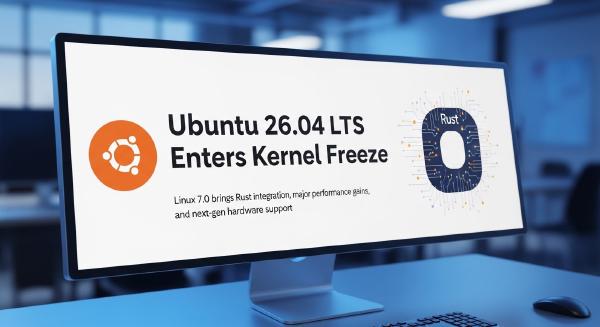
Ubuntu ships with Linux 7.0, marking a symbolic version jump with real improvements:
- 🚀 Faster NTFS performance (great for dual-boot users)
- 🧠 FRED interrupt handling (modern CPU safety improvements)
- 🆕 Day-one support for next-gen CPUs
- 🦀 Increasing integration of Rust in kernel components
Fedora uses Linux 6.19, which is slightly older but still highly optimized and stable.
👉 Verdict:
- Latest hardware & features → Ubuntu wins
- Stable, well-tested kernel → Both are solid
🖥️ 2. X11 vs Wayland: Compatibility vs Future #
This is the biggest philosophical difference.
- Ubuntu: Uses Wayland by default, but still allows switching to X11
- Fedora: Fully removed X11—Wayland only
Wayland offers:
- Better multi-monitor support
- Lower latency
- Improved security
But removing X11 can affect:
- Older NVIDIA GPUs
- Legacy apps
- Some remote desktop tools
👉 Verdict:
- Modern hardware → Fedora
- Compatibility & flexibility → Ubuntu
🎨 3. KDE Desktop Experience #
Fedora 44 shines with its KDE Plasma 6.6 Spin:
- Native KDE login experience
- Improved setup workflow
- Better Wayland integration
- Added features like OCR in screenshot tools
Ubuntu does not offer KDE officially (you must use Kubuntu).
👉 Verdict:
- KDE users → Fedora dominates
- GNOME users → Tie
📦 4. Package Management: Evolution vs Stability #
Ubuntu sticks with:
- APT (reliable, mature)
- Snap (controversial but improving)
Fedora introduces:
- DNF5 → faster dependency resolution, lower memory usage
- Optional Nix support for advanced dev workflows
👉 Verdict:
- Speed & innovation → Fedora (DNF5)
- Stability & familiarity → Ubuntu (APT)
🧑💻 5. Developer Toolchain: Conservative vs Bleeding Edge #
| Tool | Ubuntu 26.04 | Fedora 44 |
|---|---|---|
| GCC | 14 | 16 |
| LLVM | 19 | 22 |
| Ruby | 3.3 | 4.0 |
| Go | 1.23 | 1.26 |
| MariaDB | 10.11 | 11.8 |
Fedora clearly pushes newer stacks, while Ubuntu prioritizes stability.
👉 Verdict:
- Developers & learners → Fedora
- Production environments → Ubuntu
👥 Who Should Choose What? #
🐣 Beginners #
Pick: Ubuntu 26.04 LTS
- Easier installation
- Massive community support
- Long-term stability
- X11 fallback for safety
💻 Developers #
Pick: Fedora 44
- Newest compilers and languages
- Faster package management
- Better dev tooling flexibility
🏢 Enterprises #
Pick: Ubuntu 26.04 LTS
- Predictable lifecycle
- Long-term security updates
- Strong cloud ecosystem support
🎮 Gamers #
Pick: Fedora 44 (with caveats)
- Better Wayland performance
- Faster Mesa updates
- Lower latency (especially KDE)
⚠️ NVIDIA users may prefer Ubuntu for compatibility.
🌳 Decision Tree #
                    Need LTS Stability?
                   /                   \
                 Yes                    No
                  |                      |
            Ubuntu 26.04         Need KDE Desktop?
                                /                 \
                              Yes                  No
                               |                    |
                           Fedora 44         Like bleeding edge?
                          (KDE Spin)        /                   \
                                          Yes                   No
                                           |                     |
                                       Fedora 44          Ubuntu 26.04
🔄 Alternatives Worth Considering #
- Linux Mint → Best for Windows switchers
- Pop!_OS → Great for creators and NVIDIA users
- openSUSE Tumbleweed → Rolling release + powerful tools
- Arch Linux → Maximum control, steep learning curve
🧠 Final Thoughts #
There’s no absolute winner—only different philosophies:
- Ubuntu: Stability, accessibility, long-term reliability
- Fedora: Innovation, speed, pushing Linux forward
👉 If you want a system that “just works” for years → choose Ubuntu 👉 If you want the latest tech and don’t mind change → choose Fedora
In the end, the best Linux distribution is the one that fits your workflow—not someone else’s benchmark.