Linux Kernel 7.0: Rust, AI Rules, Performance and Security
The release of Linux Kernel 7.0 marks a structural evolution in kernel development, focusing on memory safety, governance of AI-assisted contributions, and measurable performance improvements. Beyond a version increment, it reflects a shift in how the kernel is built, reviewed, and secured for long-term scalability.
Ubuntu 26.04 LTS is among the first major distributions to adopt this kernel, bringing these advancements directly to production environments.
🦀 Rust as a First-Class Kernel Language #
Rust integration moves from experimental to foundational in Linux 7.0, enabling safer subsystem development.
Key Benefits #
-
Memory Safety
Eliminates common vulnerabilities such as buffer overflows and use-after-free errors. -
Improved Code Quality
Compile-time guarantees reduce runtime failures and simplify debugging. -
Ecosystem Validation
Large-scale deployments, particularly in Android, demonstrate production readiness.
Rust adoption targets critical subsystems where reliability and security are essential.
🤖 AI-Assisted Code Governance #
Linux 7.0 introduces formal rules for AI-generated or AI-assisted contributions to maintain code integrity and legal clarity.
Core Policies #
-
Developer Accountability
Contributors are fully responsible for submitted code, regardless of tooling used. -
No AI Attribution
AI systems cannot be listed as authors in contribution metadata. -
Mandatory Disclosure
AI-assisted code must be explicitly labeled using standardized tags.
These rules ensure transparency while allowing developers to leverage AI tools responsibly.
⚡ Performance Improvements in Scheduling and Memory #
Linux 7.0 delivers incremental but impactful performance enhancements across scheduling and memory management.
PREEMPT_LAZY Scheduling #
- Defers non-critical background tasks
- Prioritizes latency-sensitive workloads
- Reduces micro-stutter in interactive and gaming scenarios
Memory and Swap Optimization #
- Faster swap operations through optimized data handling
- Improved zram efficiency with reduced CPU overhead
- Better performance under memory pressure
These optimizations benefit both desktop systems and high-density workloads.
🔐 Security Enhancements and Future Readiness #
Security improvements focus on long-term resilience against emerging threats.
Post-Quantum Cryptography #
- Integration of modern cryptographic primitives for future-proof security
- Enhanced module authentication mechanisms
Deprecation of Legacy Algorithms #
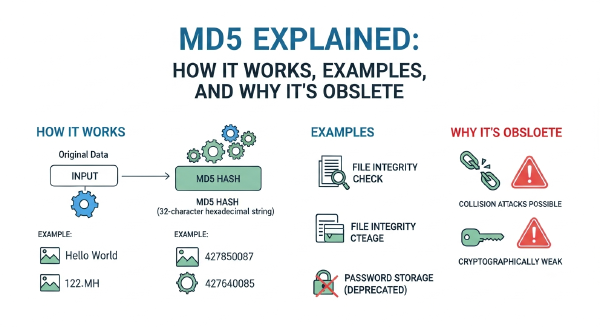
- Removal of outdated hashing methods such as SHA-1
- Enforcement of stronger cryptographic standards
These changes align the kernel with evolving security requirements.
🖥️ Hardware Enablement and Ubuntu 26.04 Integration #
Linux 7.0 enhances support for next-generation hardware and software stacks.
Key Enhancements #
- Native support for upcoming CPU architectures
- Early integration of next-generation wireless standards
- Improved graphics and compute performance via updated drivers
- Faster container startup and I/O efficiency
Ubuntu 26.04 LTS integrates these features, providing a stable platform for both desktop and server deployments.
📌 Conclusion #
Linux Kernel 7.0 represents a transition toward safer, more maintainable, and future-ready kernel development. The adoption of Rust, formal governance of AI-assisted code, and targeted performance improvements collectively strengthen the foundation of the Linux ecosystem.
By balancing innovation with stability, Linux 7.0 sets the direction for the next decade of open-source operating system development.