
When your phone battery is running low, you might get a notification to close power-hungry apps. This reminds us that software efficiency matters just as much as hardware when it comes to saving energy.
A research team from Portugal published a study titled Energy Efficiency Across Programming Languages, comparing 27 programming languages across three dimensions: energy consumption, execution time, and memory usage.
Research Methodology: How the Study Was Conducted #
- Source: Computer Language Benchmarks Game
- Benchmarks: 10 classic algorithm problems
- Process: Each implementation was run 10 times, with Intel RAPL used to measure energy consumption
- Environment: Desktop running Ubuntu Server 16.10
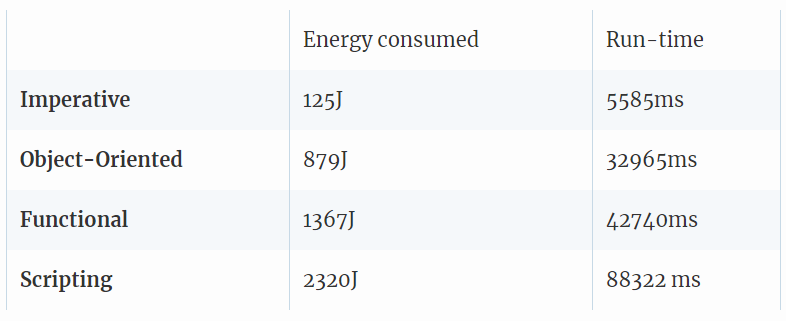
Languages were categorized by their execution model (compiled, interpreted, VM-based) and programming paradigm (imperative, functional, object-oriented, scripting).
Does Faster Code Always Save Energy? Not Necessarily #
Many developers assume faster execution = lower energy usage, but results show otherwise.
- In some cases, Rust was more energy-efficient than C despite similar speeds
- Pascal was 55% slower than Chapel, yet consumed 10% less energy
📌 Key Insight: Speed does not guarantee energy efficiency.
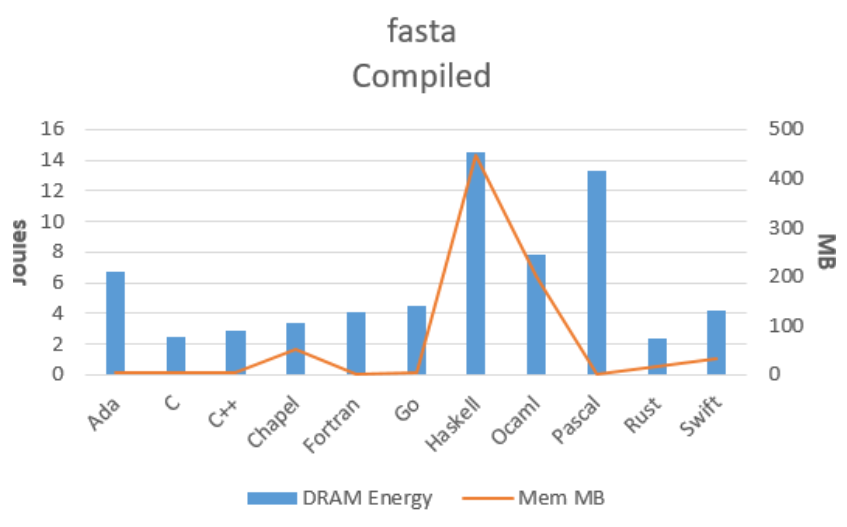
- The CPU accounted for ~88% of total energy usage
- Peak memory (DRAM) consumption had little correlation with total power draw
Energy Efficiency Results: Compiled Languages Outperform Others #
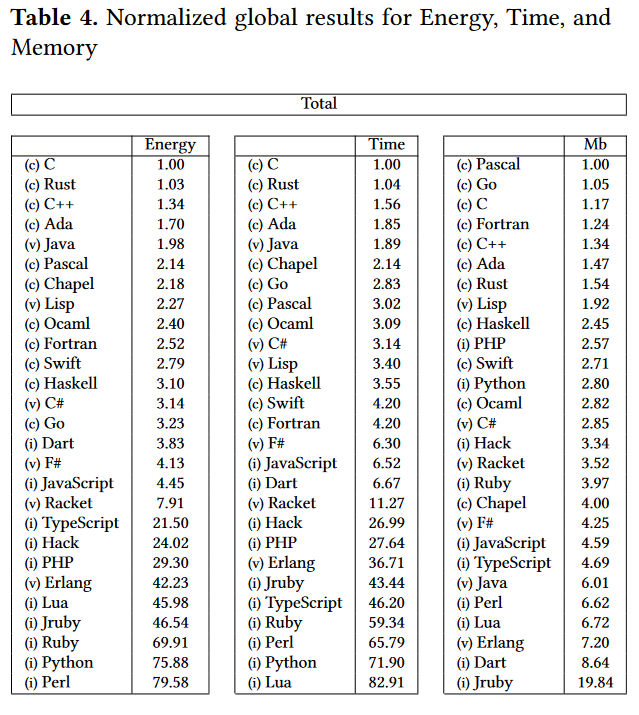
Across all metrics, compiled languages consistently performed best:
- Average energy use: Compiled 120J < VM 576J < Interpreted 2365J
- Execution time: Compiled 5103ms < VM 20623ms < Interpreted 87614ms
- Memory usage: Compiled 125MB < VM 285MB < Interpreted 426MB
Highlights:
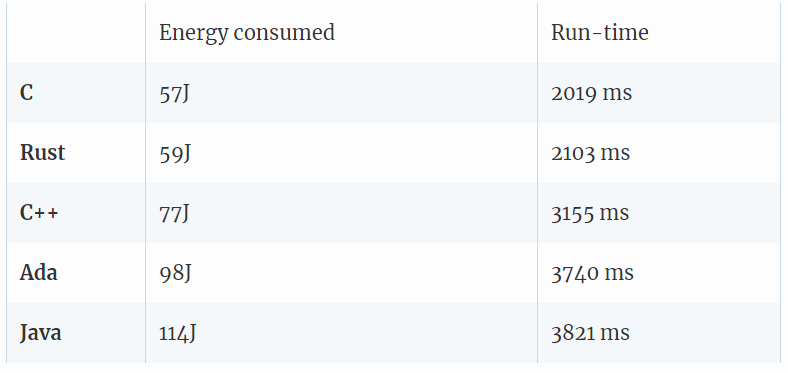
- The top 4 most energy-efficient languages were almost all compiled (Java was the only VM-based exception).
- Interpreted languages like Python, Perl, Ruby, Lua, and TypeScript were the least efficient.
- Exceptions existed: for regex processing, interpreted languages like TypeScript, PHP, and JavaScript consumed less energy than compiled ones.
Balanced Performance: Best Programming Languages Overall #
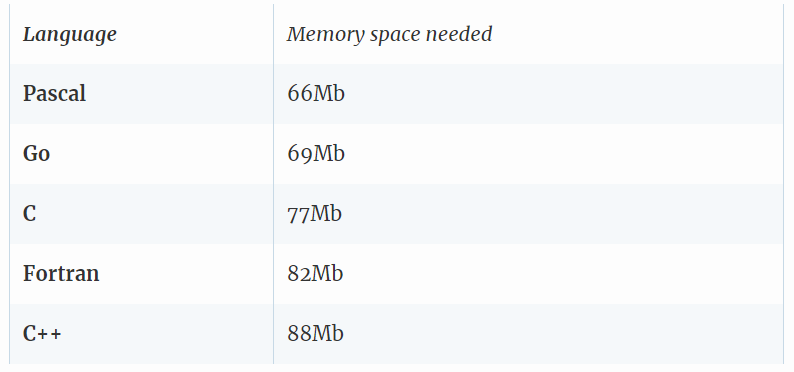
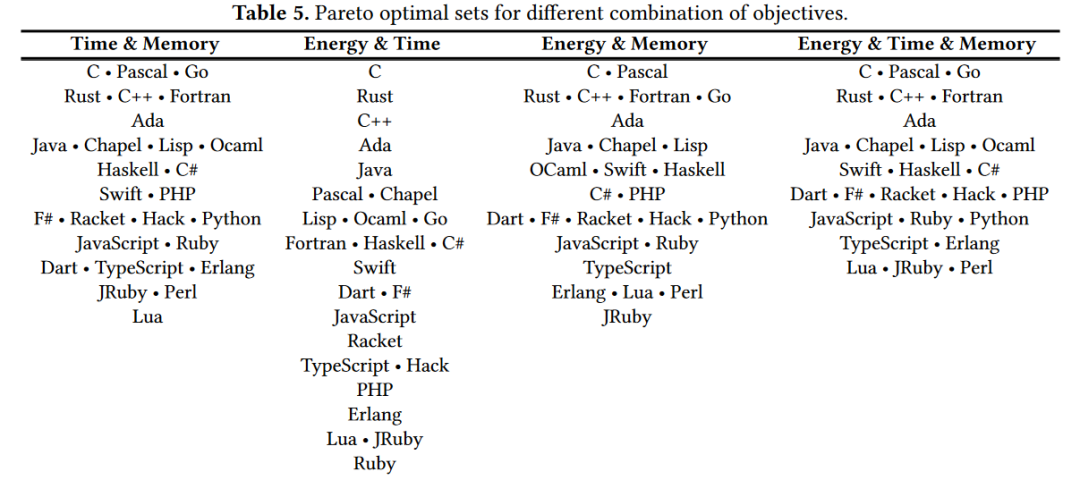
The study compared languages across energy, execution time, and memory usage to find the most balanced options:
- Best for Energy + Speed → C
- Best for Energy + Memory → C or Pascal
- Best Overall Balance → C, Pascal, Go
Conclusion: Choosing Programming Languages with Energy in Mind #
Every programming language comes with trade-offs:
- Scripting languages (Python, Ruby, etc.) → High productivity, slower runtime, higher energy use
- Compiled languages (C, Rust, C++, etc.) → Faster execution, lower energy consumption, steeper learning curve
📌 Key takeaway: The “best” language depends on your project’s priorities—developer productivity, runtime speed, memory efficiency, or energy sustainability.
👉 Would you choose a more energy-efficient programming language if it meant longer development time?